
Picture this: You are relaxing on your couch, sipping a hot cup of masala chai, and browsing through a premium online luxury store. You are looking for that perfect, timeless shawl to wear to an upcoming winter wedding or to gift to someone special. In you mind, the question lurks – is a 70 cashmere 30 silk shawl real pashminaSuddenly, you land on a stunning wrap with glowing customer reviews. The color is deep, the drape looks incredibly fluid, and it has an elegant, subtle glow.
You scroll down to read the product specifications, expecting to see “100% Pure Pashmina.” Instead, the fabric label reads: “70% Cashmere, 30% Silk.”
Your online shopping cart comes to a grinding halt. A wave of doubt hits you. You immediately think: “Wait a minute… am I being ripped off here? Is this a cheap duplicate or a clever marketing trick? If it has silk in it, can it even be authentic?”
It is completely natural to feel confused. In the premium textile world, we are constantly told that “pure” is the only thing that matters. We assume that if a textile isn’t 100% unblended wool, it must be an inferior product designed to cut corners. But when it comes to the intersection of fine Himalayan wool and pure silk, the rules change completely.
If you are staring at a product description online wondering is a 70 cashmere 30 silk shawl real pashmina, you have come to the right place. Let’s pull back the curtain on this luxury blend, expose the myths, and figure out exactly what you are paying for.
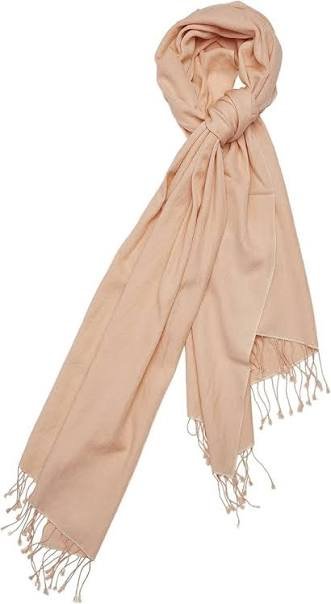
The Featured Snippet Blueprint: Direct Definition
For those looking for a quick, definitive answer to copy and paste, here is the exact verdict that Google looks to highlight at the top of search results.
Yes, a 70/30 cashmere-silk blend is considered an authentic luxury wrap. While not 100% pure pashmina, pure mulberry silk is intentionally blended into the warp to give the ultra-delicate hand-spun changthangi wool structural strength, high tensile durability, and a beautiful fluid drape.
The Anatomy of the 70/30 Blend: Is A 70 Cashmere 30 silk shawl real pashmina ? Why Mix Silk with Cashmere?
To understand why master weavers in India choose to combine these two fibers, we have to look at the extreme delicate nature of changthangi goat wool.
True Pashmina is sourced from the soft underfleece of goats that roam the freezing heights of Ladakh. This natural fiber is phenomenally thin, measuring between 12 to 15 microns. Because the fiber is so exquisitely fine and short, spinning it into a continuous yarn requires incredible patience. When you weave 100% pure Pashmina on a traditional wooden handloom, the thread is so fragile that even a slightly sudden tug by the artisan can cause it to snap.
[ Pure Silk Fiber ] (Long, High Tensile Strength, Glossy)
                     └──► BLENDED TOGETHER ──► [ 70/30 Luxury Warp & Weft ]
[ Pashmina Fiber  ] (Short, Ultra-Fine, Insulating, Matte)
To solve this vulnerability, weavers developed a brilliant technique centuries ago: blending natural silk into the warp (the vertical threads attached to the loom).
By using 30% fine, long-filament mulberry silk as the structural spine of the shawl and weaving 70% ultra-warm pashmina cashmere across it as the weft (horizontal threads), they created a hybrid fabric. The silk acts as a protective shield, reinforcing the fragile wool. This is not done to secretly save money or create a cheap substitute; it is a deliberate artistic choice that produces an incredibly durable, wearable, and resilient luxury textile.
Pros and Cons of Buying 100 Pure Pashmina vs Silk Cashmere Blend
When investing your money, you shouldn’t ask which fabric is universally “better.” Instead, ask which fabric matches your lifestyle, your wardrobe, and your personal comfort. Let’s break down the pros and cons of buying 100 pure pashmina vs silk cashmere blend using a structured look at both sides.
              ┌────────────────────────────────────────┐
              │          WHICH ONE TO CHOOSE?          │
              └───────────────────┬────────────────────┘
                                  │
         ┌────────────────────────┴────────────────────────┐
         ▼                                                 ▼
[ 100% Pure Pashmina ]                            [ 70/30 Silk Cashmere ]
• Feather-light cloud feel                       • Fluid, gorgeous drape
• Ultimate organic warmth                        • Extreme tensile strength
• Best for plain/light embroidery                • Best for heavy bridal artwork
Profile 1: The 100% Pure Pashmina Shawl
This is raw, unadulterated Himalayan luxury in its most organic state.
- The Pros:
- Ultimate Cloud Sensation: It yields an unmatched, feather-light feel. A full-sized plain shawl weighs barely 150 grams and feels like a weightless cloud on your skin.
- Maximum Natural Warmth: Because there is no silk to interrupt the insulation, it traps your body heat effortlessly, making it incredibly warm despite being wafer-thin.
- The Classic Matte Look: It features a rich, deep, completely matte finish that looks timeless and understated.
- The Cons:
- Extreme Fragility: It requires delicate care. It can snag easily on jewelry, watch straps, or sharp handbag zippers.
- Pilling Tendency: Because the natural short fibers rub against each other during wear, a 100% pure shawl will naturally develop tiny fuzzy fiber balls (pilling) over time, requiring gentle maintenance.
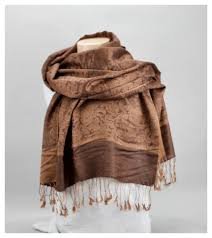
Profile 2: The 70% Cashmere / 30% Silk Blend Shawl
This is a high-performance luxury hybrid designed for modern wear and heavy artistic embroidery.
- The Pros:
- A Beautiful Fluid Drape: Silk introduces a gorgeous weight and elasticity to the fabric. A 70/30 blend hugs your body silhouettes, flows elegantly, and doesn’t crease or wrinkle easily.
- Breathtaking Luster: The mulberry silk gives the shawl a soft, deep, organic sheen that captures light beautifully under artificial venue lights or evening sun.
- Artisan Strength: The added strength allows craftsmen to execute incredibly dense, heavy hand embroidery without tearing holes through the foundation fabric.
- The Cons:
- Slightly Heavier: It lacks that completely “weightless, floating” characteristic of pure wool. It feels substantial and has a bit of an anchor to it.
- Slightly Less Insulating: While still exceptionally warm due to the 70% cashmere content, silk is a cooling fiber by nature, meaning it won’t feel as intensely hot as a 100% pure piece in sub-zero climates.
The Quick Comparison Index
To help you visualize the direct differences between these two options at a single glance, look at this scannable rating index.
| Evaluation Metric | 100% Pure Pashmina Masterpiece | 70% Cashmere / 30% Silk Blend |
| Visual Texture | Elegantly matte, deep, and organic. | Soft luster, radiant sheen under evening lights. |
| Fabric Drape | Delicate, holds its shape crisp and structured. | Highly fluid, rippling cascades, hugs body contours. |
| Resilience / Lifespan | Requires high caution; prone to snags. | Highly durable; resistant to tears and heavy friction. |
| Embroidery Capacity | Limited to lightweight or medium needlework. | Perfectly holds heavy, dense, intricate bridal art. |
| Weight Sensation | Ultra weightless (approx. 140–160 grams). | Moderate substance (approx. 200–250 grams). |
Deep-Dive: When to Choose 100% Pure vs. a 70/30 Blend
Now that you know the structural mechanics, let’s talk about real-world application. When you are shopping online in India, how do you decide which one to add to your cart?
When to Go for 100% Pure Pashmina
Choose a pure, unblended shawl if you are a heritage purist who prioritizes historical authenticity and absolute warmth above all else.
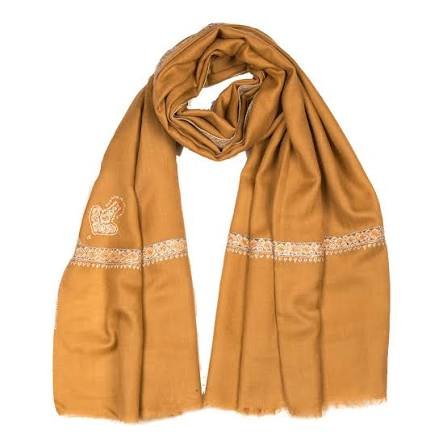
- The Best Use Cases: It is perfect for chilly outdoor evening dinners, formal indoor winter functions, or traveling to destinations with freezing temperatures where you need maximum insulation without packing heavy, bulky jackets.
- Styling Match: It pairs beautifully with classic, elegant Indian formal wear like crisp tussar silk sarees, handloom raw silk suits, or understated pastel garments where the focus is on raw textile luxury rather than loud bling.
When to Opt for a 70/30 Silk Cashmere Blend
Choose the silk-blended variant if you are looking for a versatile, durable, and striking accessory that can withstand the energy of festive Indian celebrations.
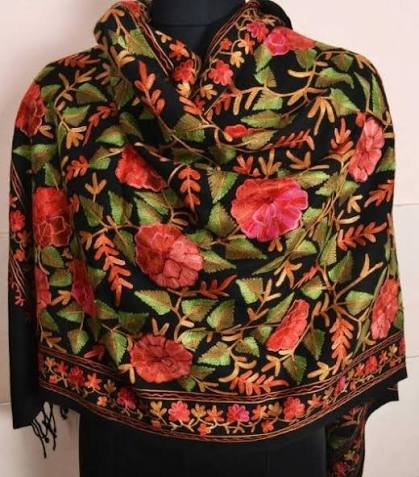
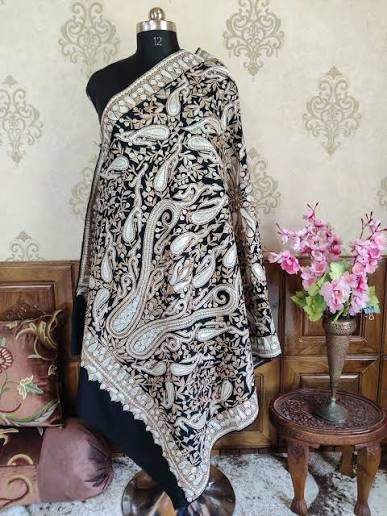
- The Best Use Cases: This is the absolute undisputed champion for wedding guests and bridal trousseaus. If you are buying a shawl heavily adorned with detailed hand embroidery like a Jaaldar pattern or a complex border layout, you want the silk blend. The silk threads hold the thousands of needle stitches securely in place without causing the shawl to sag, pucker, or distort out of shape.
- Styling Match: The subtle gloss makes it an incredible companion for glamorous wedding environments. It coordinates beautifully with metallic zari work, heavily embroidered georgette lehengas, and modern evening gowns where a bit of light reflection matches the celebratory mood.
Avoid the Trap: Spotting Fake Silk Blends Online
Because the 70/30 cashmere-silk tag is highly popular online, dishonest manufacturers use it as a golden opportunity to sell cheap synthetic duplicates. They know buyers are looking for a soft feel and a shiny look, so they swap out luxury mulberry silk for cheap viscose or rayon, and replace precious cashmere with acrylic wool.
If you want to ensure you are getting the real deal, use this simple sensory checklist to figure out what does real kashmiri pashmina feel like when blended with genuine silk, compared to an artificial synthetic substitute.
[ Real Silk Blend ]  ──► Rich, deep, organic glow ──► Zero static electricity when rubbed
[ Fake Viscose/Acrylic ] ──► Harsh metallic glare ──► Crackles and clings to hair instantly
- The Static Electricity Test: Viscose and acrylic are highly prone to building up static electricity friction in dry winter weather. Rub the shawl against itself or a plastic pen for 10 seconds. If it crackles, makes tiny sparks, or immediately clings to your skin, it is a synthetic difference between real pashmina and fake viscose situation. Genuine silk and cashmere will never hold static charge.
- The Luster Check: Pure silk has an organic, multi-dimensional glow that shifts softly when you move the fabric. Fake synthetic viscose has a harsh, uniform, metallic sheen that looks like plastic glitter under white LED house lights.
- The Burn Test Verdict: If you pull a loose thread from a genuine blend and burn it, the cashmere portion will smell like burnt hair while the pure silk portion will leave minimal ash. If it smells like burning paper or melts into a hard plastic bead, it is entirely synthetic.
A Note on Pricing: What Should a Real Blend Cost?
Let’s address the budget factor. Some online stores try to pass off a 70/30 blend at the exact same price tier as a 100% pure heirloom, which can be an overcharge. Conversely, some sell it suspiciously cheap.
While pure silk is an expensive luxury fiber, it is more readily available and easier to process than rare, hand-combed Ladakh wool. Therefore, the original pashmina shawl price in India for a plain 70/30 silk cashmere blend is typically about 20% to 30% more affordable than a 100% pure plain pashmina shawl of the exact same size.
A genuine, high-quality plain 70/30 cashmere-silk stole or shawl should generally range between ₹5,500 to ₹8,000 in the Indian market. If you see an online boutique selling a “pure silk cashmere blend” for ₹999, you are looking at polyester and viscose masquerading under a fancy name. Always purchase from trusted portals that offer transparent material breakdowns and clear return policies.
Caring for Your Luxury Blends: A Quick Manual
Whether you choose a pure unblended masterpiece or a fluid silk hybrid, luxury natural fibers demand respect when it comes to maintenance.
Never throw either of these fabrics into an automated washing machine. The rough tumbling action will destroy the fine cashmere scales and distort the silk threads. Always opt for professional dry cleaning, or hand wash gently at home using cold water and a tablespoon of mild baby shampoo.
When drying, never wring the shawl or hang it from a clothesline, which stretches out the warp threads. Instead, lay it completely flat on a clean, dry cotton bedsheet under a fan. Store them folded inside a breathable muslin bag with a few natural cedar balls or dried neem leaves to keep moths away, and your investment will look pristine for decades.
The Final Verdict: Is It a Rip-Off?
Let’s return to your online shopping cart. If you are looking at a certified 70% Cashmere / 30% Silk shawl from a reputable boutique, you are absolutely not being ripped off.
You are looking at a highly traditional, incredibly durable, and visually magnificent variation of heritage luxury wear. It isn’t an imitation; it is a specialized blend that combines the unmatched, insulating softness of the Himalayas with the timeless, fluid elegance of pure silk.
If you want a highly durable wrap that drapes like liquid gold, features a romantic evening sheen, and can safely carry beautiful, heavy embroidery across wedding seasons, the 70/30 blend is your absolute best match. If you want raw, historical, weightless warmth that feels like an organic cloud, save up a little extra budget and opt for 100% pure Pashmina. Both choices hold incredible artistic value—just make sure you buy from transparent vendors who honor the true craft!
Frequently Asked Questions (FAQs)
1. Can a 70 cashmere 30 silk shawl get a government GI Tag?
No. The official Indian Kashmir Pashmina GI Tag is strictly reserved for shawls that are 100% pure pashmina, spun completely by hand, and woven on traditional wooden handlooms. Because a 70/30 blend intentionally introduces silk into the fabric structure, it cannot receive the standard pure GI certification hologram, even if the cashmere inside it was sourced directly from Ladakh.
2. Is this blend suitable for hot and humid weather in India?
While pure cashmere is strictly an insulating winter fiber, the inclusion of 30% natural mulberry silk makes the 70/30 blend remarkably breathable. It is an exceptional option for mild winter transitions, air-conditioned formal indoor evening halls, or cool autumn nights in regions that don’t experience extreme, freezing North Indian winters.
3. How can I tell if the silk used in the blend is pure or artificial?
The easiest way is to observe how the fabric moves. Pure silk gives the shawl a signature “fluid” weight—when you shake it, it ripples smoothly like water. Artificial silk blends (like viscose combinations) feel stiff, drop flat, and hold sharp fold creases easily instead of bouncing back smoothly.
Did this breakdown clear up your shopping doubts? Let us know in the comments below which variety fits your style better—the classic matte pure pashmina or the glossy fluid silk blend! Don’t forget to bookmark pashminashawlsindia.com for your ultimate guide to premium winter style.
See Also
The Viscose vs. Pashmina Showdown: Don’t Get Fooled by a Shiny Fake!
Real vs Fake Pashmina: Kashmiri Artisan Shows the Truth (+ Burn Test Demo!)
How to Identify Pure Pashmina Shawl at Home: The Complete 6-Step Checklist