
Let’s be completely honest. There is absolutely nothing in this world that matches the sheer, unadulterated luxury of wrapping a pure Kashmiri Pashmina around your shoulders. It feels like a warm, weightless cloud hugging you on a freezing winter evening. For generations in Indian households, a genuine Pashmina hasn’t just been a piece of clothing—it is an heirloom, a prized possession passed down from Dadi to Poti, carrying stories, heritage, and pure love.
But walk into any local market today, or scroll through flashy e-commerce websites online, and you will find thousands of shops loudly screaming, “100% Pure Kashmiri Pashmina at just ₹1,500!”
As a smart Indian buyer, your internal radar should immediately start buzzing. Why? Because the market is absolutely flooded with clever, machine-made synthetic duplicates often called “Fashmina.” These are nothing but cheap viscose, polyester, or polyester-blended wool treated with softeners to mimic luxury.
If you have just bought a gorgeous shawl or are planning to invest your hard-earned money into one, you don’t need to send it to a fancy textile testing laboratory in Srinagar to know the truth. You can easily spot an imposter right in your living room.
In this comprehensive, best-in-class guide, we will walk you through exactly how to identify pure pashmina shawl at home using a simple, fool-proof 6-step checklist. Grab your shawl, and let’s test it together!
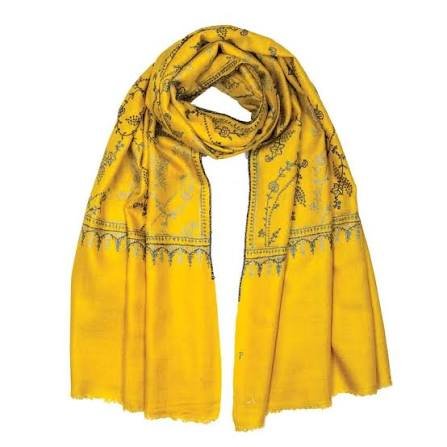
The Root Problem: Why Are Fake Pashminas So Common?
Before we jump into our checklist on how to check pure pashmina fabric, we need to understand what makes this fiber so rare. True, original Pashmina comes from the fine underfleece of the Changthangi goat (Capra Hircus), which lives at altitudes above 14,000 feet in the freezing Ladakh region.
[ Changthangi Goat in Ladakh ] ──( Hand-Combed Wool )──► [ Hand-Spun Yarn ] ──( Wooden Handloom )──► [ Pure Kashmiri Pashmina ]
To survive temperatures that drop to minus 40 degrees, these incredible goats grow an ultra-fine undercoat. This fiber is exceptionally delicate, measuring between 12 to 15 microns in diameter. To put that in perspective, a single strand of human hair is roughly 70 microns wide!
Because the fiber is so exquisitely thin, it cannot survive the harsh tension of automated industrial power looms. It must be hand-spun on a traditional spinning wheel (charkha) and painstakingly handwoven on wooden looms by skilled artisans in Kashmir. One single plain shawl takes days to weave, and highly intricate embroidered pieces can take months—even years!
Naturally, this labor of love reflects in the original pashmina shawl price in India. A genuine, hand-loomed plain Pashmina shawl will easily start from ₹8,000 to ₹10,000 and go up drastically depending on the embroidery. So, if someone sells you a flawless shawl for a couple of thousand rupees, you are most likely looking at a synthetic duplicate.
Let’s dive into the core tests to separate the authentic masterpieces from cheap duplicates.
Step 1: Inspect the Weave for Beautiful Handloom Irregularities
The absolute first step in learning how to identify pure pashmina shawl at home is simply using your eyes against a strong light source.
       [ Looking Through a Natural Light Source ]
┌─────────────────────────────────────────────────────────┐
│  •  • . •   •  •  • . •   •  •  •  ◄── Slight, uneven   │
│   •  •  • .  •  •  •   • . •  •  •       irregular gaps │
│  • . •  •   •  •  • . •   •  •  • .      (Hand-loomed)  │
└─────────────────────────────────────────────────────────┘
When you hold a genuine, authentic hand-loomed Pashmina shawl up against a bright window or a strong lamp, look closely at the grid structure of the threads. Because human hands operate the wooden loom, the tension of the weave varies slightly throughout the fabric. You will notice tiny, asymmetrical gaps, slightly uneven thread thicknesses, and beautiful mini-irregularities in the weaving grid.
Now, compare this to a fake machine-made wrap. A power loom works with mechanical, mathematical precision. If you hold a fake acrylic or synthetic shawl up to the light, the weave will look perfectly uniform, flawlessly spaced, and clinical.
Pro Tip for Indian Buyers: Remember, in the world of heritage handicrafts, perfection is the mark of a soulless machine. Slight imperfection is the ultimate signature of human craftsmanship.
Step 2: The Classic Ring Test (And the Big Myth Blown Wide Open)
You cannot talk about checking authenticity without addressing the legendary pashmina burn test vs ring test debate. Since the days of the Nawabs and British royals, the “wedding ring test” has been celebrated as the ultimate gold standard.
The test itself is incredibly simple:
- Take a standard metallic finger ring or wedding band.
- Smooth out your folded shawl.
- Gently pull the shawl through the center of the ring.
If it glides through smoothly like melted ghee, people assume it is 100% pure.
The Big Catch You Must Know
While this test is an excellent indicator for a lightweight, plain, open-weave pashmina stole, it is not entirely foolproof anymore.
First of all, modern textile manufacturers have become incredibly clever. They spin synthetic viscose so thin that a fake viscose wrap can also slide through a ring with ease.
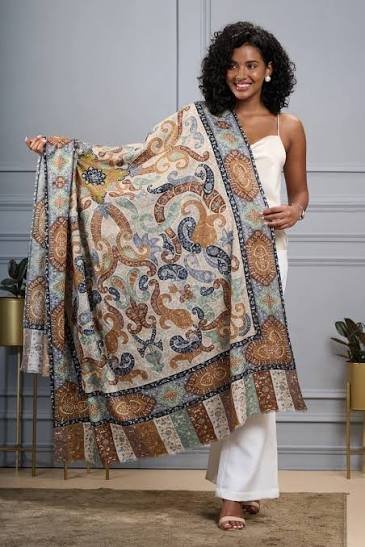
Secondly, if you have invested in a heavy, authentic Kashmiri shawl adorned with dense, breathtaking Sozni needlework or a tapestry-like Kani weave, it will naturally bunch up and get stuck inside the ring due to the thick embroidery threads. Does that mean your embroidered heirloom is fake? Absolutely not! Therefore, use the ring test as a starting indicator for plain shawls, but never rely on it blindly.
Step 3: The Burn Test (The Absolute Ultimate Verdict)
If you want a definitive answer with 100% certainty, this is the master test. It completely settles the debate of pashmina burn test vs ring test. Since it requires sacrificing a tiny bit of material, you must execute this very carefully at home.
  [ Tweezers holding thread ] ──► 🔥 [ Matchstick / Lighter ]

  • Smells like burnt hair?   ──► 100% Pure Animal Wool (Real)
  • Smells like burnt paper?  ──► Viscose / Rayon (Fake)
  • Melts into a plastic bead?──► Polyester / Acrylic (Fake)
How to Execute the Burn Test Safely:
- Go to the edge or the loose fringes of your shawl.
- Carefully pull out one or two small individual strands of thread.
- Hold the thread firmly with a pair of metal tweezers over a non-flammable surface (like a ceramic plate or a steel bowl).
- Light a matchstick and bring the flame to the tip of the thread.
- Observe the smell, the flame behavior, and the residue left behind.
Reading the Results Table:
| Reaction Indicator | Pure Pashmina Fiber | Synthetic Acrylic / Polyester | Viscose / Rayon Fabric |
| Scent/Odor | Smells strongly of burnt hair or keratin. | Sharp, pungent chemical or burning plastic smell. | Smells like burnt paper or wood. |
| Flame Behavior | Burns slowly, fizzles out quickly when flame is removed. | Melts rapidly, shrivels up, and can catch fire with black smoke. | Burns quickly with a steady, bright flame. |
| Residue / Ash | Leaves behind a fragile, dull black ash that crumbles completely into powder between your fingers. | Forms a hard, rigid, shiny black plastic bead that cannot be crushed. | Leaves almost no ash, or a tiny trace of soft grey ash. |
Because pure Pashmina is a natural protein fiber harvested from animal hair, it behaves exactly like human hair when exposed to fire. Synthetics are petroleum derivatives, so they melt into hard plastic beads. This test exposes the absolute difference between real pashmina and fake viscose instantly. If a seller hesitates or refuses to let you pull a tiny fringe thread for a burn test, take your money and walk away!
Step 4: The Static Electricity Test (The Friction Check)
Ever experienced that annoying winter phenomenon where your clothes crackle, spark, and make your hair stand on end? That is static electricity, and it is your biggest weapon when learning how to check pure pashmina quality at home.
Natural animal protein fibers possess exceptional moisture-retaining properties, making them absolute zero-conductors of static electricity under normal wear. Synthetics, on the other hand, love static.
How to Run the Friction Check:
- Take your shawl into a dark or quiet room.
- Take a plastic pen or an acrylic ruler and rub it vigorously against a synthetic garment or a cushion for 10-15 seconds.
- Bring it close to the shawl, or try rubbing two layers of the shawl against each other quickly.
- The Imposter Reveal: If you hear tiny crackling sounds, see microscopic sparks, or notice the fabric immediately clinging to your skin or attracting dust particles, it is filled with synthetic polyester or nylon blends. Genuine Pashmina remains completely calm, smooth, and static-free, no matter how much you rub it.
Step 5: The Matte Luster vs. Artificial High-Shine Check
If you want to know what does real kashmiri pashmina feel like and look like visually, you need to understand its relationship with light.
Original Changthangi goat wool has an inherently dull, rich, matte appearance. It does not possess a natural mirror-like reflective shine. It has an elegant, understated depth that exudes quiet luxury.
[ Real Pashmina ] ───► Absorbs light softy ───► Elegant, Matte Finish
[ Fake Viscose ]  ───► Reflects light harshly ──► Loud, Metallic Gloss
Many cheap duplicate shawls are woven with heavy rayon or semi-synthetic viscose filaments to give them an attractive appearance. If you step out under direct Indian sunlight or look at the fabric under bright white LED home lights and notice a distinct, glittering sheen or a glossy metallic shine, it is a glaring red flag.
The Silk Exception
There is one caveat here: the classic Pashmina-Silk blend (typically 70% Pashmina and 30% Silk). This is a highly respected, authentic variety often used to give shawls extra strength and a beautiful, fluid drape. A silk blend will have a lovely glow, but it will be a deep, organic, soft luster, completely different from the loud, superficial, plastic glitter of fake viscose.
Step 6: The Weightless Warmth & Quick “Palm Touch” Test
One of the most magical properties of pure luxury cashmere is its weight-to-warmth ratio. A standard, pure plain shawl measures roughly two meters in length but weighs a mere 150 to 180 grams! It is so light you will barely feel it resting on your skin, yet it traps body heat far more efficiently than thick sheep wool.
The 30-Second Palm Test:
If you want to feel the authentic magic of the Orient, try this simple sensory experiment:
- Rest the inner side of your wrist or the palm of your hand flat on the surface of the shawl.
- Close your eyes and hold it there for about 30 seconds.
- The Sensation: Real Pashmina will feel buttery soft, slightly organic (not slippery smooth like silk or plastic), and you will feel a distinct, comforting, cozy warmth radiating back into your skin almost instantly.
Synthetic fabrics feel completely neutral, chilly, or block air circulation entirely, making your skin feel sweaty and clammy after a few minutes instead of providing breathable, natural insulation.
Beyond the Checklist: The Ultimate Mark of Government Trust
While these home tests are fantastic for checking a shawl you already own, what should you look for while shopping to ensure you never get duped in the first place?
The absolute best way to protect yourself is by checking for the official Kashmir Pashmina GI Tag (Geographical Indication Tag).
┌────────────────────────────────────────────────────────┐
│               GOVERNMENT OF INDIA - GI TAG             │
│  [ Secure Hologram ]  Serial No: AU/30397/GI/46        │
│  • 100% Pure Ladakh Changthangi Pashm Wool            │
│  • Hand-Spun Yarn  • Woven on Kashmiri Handloom       │
└────────────────────────────────────────────────────────┘
The Government of India introduced this highly secure, non-removable, rubber-based laser hologram mark to protect traditional Kashmiri weavers and global buyers. A GI-certified shawl guarantees three strict parameters:
- The fabric is made of 100% authentic Pashm wool sourced from Ladakh with a fiber thickness of under 16 microns.
- The fiber has been entirely spun into yarn by hand using a traditional charkha.
- The shawl has been woven completely by hand on a traditional wooden loom.
Every single GI-certified piece undergoes rigorous laboratory testing at the Craft Development Institute (CDI) in Srinagar and comes with a unique identification serial number that you can cross-verify online. If you are making a high-value purchase, always ask your seller for a GI-tagged piece!
The Natural Reality Check: Yes, Real Pashmina Will Pill!
To wrap up our masterclass, let’s bust one final, incredibly common misconception held by many buyers in India. A lot of aunties and uncles buy a luxury wrap and complain the moment they see tiny, fuzzy fiber balls forming on the surface after a few wears, saying, “Arre, this has started pilling! It must be a fake!”
Actually, it is the exact opposite!
Because Pashmina is an ultra-fine, natural, delicate animal hair spun gently by hand, the friction of daily wear naturally causes loose surface fibers to cluster together. Pilling is a natural characteristic of 100% pure premium wool.
If your shawl never pills, retains a stiff, ironed look forever, and acts completely indestructible, it is highly likely a synthetic plastic polymer blend like acrylic. Treat your real shawls gently, wash them using mild baby shampoo or professional dry cleaning, store them wrapped in breathable muslin cloth away from moisture, and they will easily last for generations as timeless heirlooms.
Checklist Summary for Quick Reference
Before you head off to test your collection, save this quick reference cheat sheet:
- Look Close: Check for slight spacing variations and irregular gaps in the weaving grid against a light source.
- Feel the Weight: It should feel incredibly feather-light (under 200 grams) but provide almost instant warmth.
- Burn a Strand: Smells like burnt hair and turns to crushable powder = Real. Smells like chemicals and melts into a hard bead = Fake.
- Rub for Static: Zero sparks or static cling means it is premium natural fiber.
- Check the Tag: Look for the non-removable government GI Tag with a unique serial number for absolute peace of mind.
Investing in a genuine pashmina is an appreciation of ancient human art, a beautiful story of Ladakhi nomads, and the timeless heritage of Kashmiri master weavers. Use this 6-step checklist at home, stay informed, avoid impossibly cheap deals, and wear your authentic drapes with absolute pride!
Frequently Asked Questions (FAQs)
1. Can a pure pashmina shawl be washed in a washing machine?
Absolutely not! The aggressive spinning and tumbling action of a washing machine will ruin the delicate structure of the handwoven fibers, causing extreme shrinkage and structural damage. Always hand wash using room temperature water and an ultra-mild wool conditioner or baby shampoo, or opt for professional dry cleaning.
2. Is cashmere and pashmina exactly the same thing?
Not quite. While all Pashmina is technically a highly refined form of cashmere, not all cashmere can be called true Pashmina. Standard commercial cashmere is sourced from goats across Mongolia, China, and Iran, featuring a micron diameter of 15 to 19 microns. True Kashmiri Pashmina is harvested exclusively from the Ladakhi Changthangi goat and is much finer, measuring between 12 to 15 microns, making it softer and warmer.
3. Why does my new shawl have uneven fringes?
Uneven, fine, hair-like fringes are a major hallmark of an authentic hand-loomed shawl. These fringes are actually the raw, extended warp threads left over directly from the wooden handloom, which are gently twisted or finished by hand. Machine-made fakes usually feature separate, perfectly cut, or machine-stitched braided fringes attached to the edges.
Found this guide helpful? Drop a comment below and share your home test experiences with us! Don’t forget to bookmark pashminashawlsindia.com for more deep-dives into the mesmerizing world of heritage luxury wraps.
See Also
Pashmina Shawl | How to find genuine Kashmiri Pashmina ?
The Viscose vs. Pashmina Showdown: Don’t Get Fooled by a Shiny Fake!