
Let’s picture a very familiar scene. You are walking through a bustling winter exhibition in Delhi, checking out a boutique store in Colaba, or scrolling through a beautifully shot online store promising “authentic luxury winter wear.” Yes, we are discussing difference between real pashmina and fake viscose. Your eyes fall on an incredibly smooth, silky, and unbelievably glossy shawl. The seller smoothly approaches you, slides the fabric through his fingers, and says with absolute confidence: “Madam, this is 100% pure Kashmiri Pashmina. Touch it, it is smoother than silk, and look at that gorgeous shine!”
Even better, the price tag says just ₹2,500. It feels like an absolute steal, right?
But deep inside your mind, a little voice whispers a warning. You remember your mother or grandmother talking about their prized family heirlooms—how their old shawls felt warm, substantial, and elegantly understated, not glaringly reflective like a cheap synthetic dress.
Your intuition is spot on. What you are likely holding is not a masterpiece woven in the valleys of Kashmir. It is a highly processed, machine-made imitation made entirely out of viscose rayon.
In the Indian textile market today, viscose has earned the notorious crown of being the “#1 imposter fabric” used to trick luxury buyers. Because it can be treated chemically to feel incredibly soft and fluid, it easily masquerades as authentic Himalayan cashmere to an untrained eye.
If you are currently evaluating a shawl you already own, or are about to make an investment online and suspect it might be a shiny duplicate, this is the ultimate guide for you. Today, we put these two fabrics head-to-head in a definitive showdown to break down the exact difference between real pashmina and fake viscose, helping you safeguard your hard-earned money.
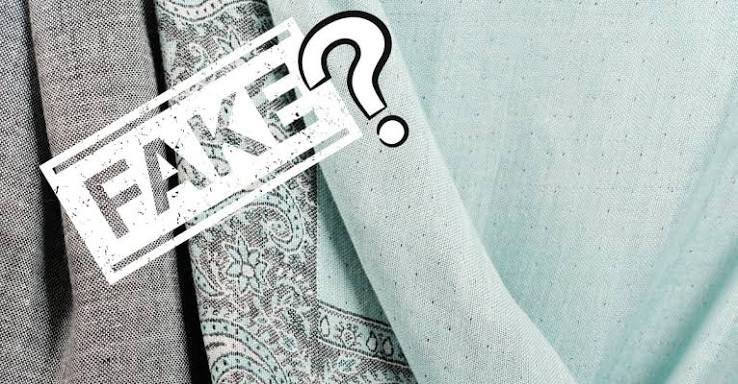
The Featured Snippet Blueprint: Head-to-Head Comparison
To understand exactly how these two materials stand against each other, look at this quick, comprehensive breakdown of their core physical and behavioral traits.
| Feature / Trait | Authentic Pure Pashmina Shawl | Fake Semi-Synthetic Viscose Wrap |
| Fiber Origin & Source | 100% Natural changthangi goat wool underfleece from Ladakh. | Regenerated plant cellulose (wood pulp) chemically processed in factories. |
| Thread Shine (Under LED Light) | Soft, muted, deep matte appearance (lightly absorbs light). | High-shine, highly reflective, artificial metallic gloss. |
| Breathability & Warmth | Microscopic air pockets offer weightless, breathable insulation. | Zero insulation properties; traps moisture and feels clammy/sweaty. |
| Friction Static Electricity | Natural protein fiber; creates zero static electricity when rubbed. | Accumulates high friction; crackles and clings to skin or hair. |
| Burn Test Residue | Smells like burnt hair; crumbles into a fine, powdery grey ash. | Smells like burnt paper; leaves minimal ash or a tiny dark flare. |
Why Viscose is India’s #1 Imposter Fabric
To avoid falling into the trap of buying a duplicate, we need to lift the curtain on how these materials are actually manufactured.
True, original Pashmina is a labor of love that begins on the freezing, high-altitude plateaus of Changthang in Ladakh. Here, the local nomadic herders hand-comb the delicate winter undercoat of the Changthangi goat.
A single goat produces less than 150 grams of usable fleece annually. Once harvested, the raw wool is transported to Kashmir, where spinning queens refine the yarn on traditional wooden wheels (charkhas) before master weavers spend weeks interlacing it on wooden handlooms. This organic process yields an ultra-fine fiber measuring just 12 to 15 microns in diameter, making it lighter and warmer than any standard sheep wool.
[ Natural Ecosystem ] Changthangi Goat (Ladakh) ➔ Hand-Spun Yarn ➔ Handloom Weaving ➔ Matte, Luxury Pashmina
[ Chemical Factory ] Wood Pulp Cellulose ➔ Acid Baths & Extrusion ➔ Power-loom Weaving ➔ Shiny, Synthetic Viscose
Now, let’s look at viscose. Viscose is a semi-synthetic material created by taking plant cellulose (like wood pulp from bamboo, pine, or eucalyptus trees) and dissolving it in a massive chemical bath of sodium hydroxide and carbon disulfide. This dissolved slurry is forced through a machine spinneret to form long, continuous, perfectly uniform synthetic filaments.
Modern factories apply a specialized, cheap texturizing process to these synthetic rayon filaments. By mechanically crimping the threads and treating them with heavy chemical silicon softeners, they mimic the fluffy, soft, and plush “loft” of natural Himalayan cashmere.
When woven tightly on high-speed automated power looms, it yields a fabric that feels slick and silky to a casual touch, completely masking its cheap, factory-made origin. This is exactly why so many buyers get confused.
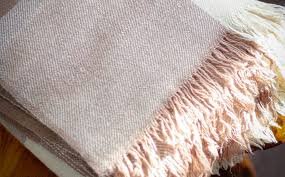
How to Check Pure Pashmina vs Viscose Yarn Structure
If you want to move past superficial guesswork, you must understand how to check pure pashmina vs viscose yarn structure down to a microscopic level. The structural blueprint of a hand-loomed natural fiber is fundamentally different from a machine-extruded chemical filament.
        [ Structural Grid Comparison Under Magnification ]

   Authentic Pashmina Structure            Fake Viscose Structure
 ┌──────────────────────────────┐        ┌──────────────────────────────┐
 │   ~ ~ ── ~~~ ── ~ ~  (Uneven)│        │ ════════════════════ (Perfect)│
 │   ││    ││     ││   Thread   │        │ ║║   ║║   ║║   ║║    Thread   │
 │   ~ ~ ── ~~~ ── ~ ~  Widths  │        │ ════════════════════ Uniform │
 └──────────────────────────────┘        └──────────────────────────────┘
1. The Tale of Two Threads: Irregular vs. Uniform
Because authentic pashmina wool is spun completely by hand, no two inches of the yarn are ever identical. Under a basic magnifying glass or by holding the fabric up against a bright window, look closely at the individual horizontal and vertical threads. You will notice subtle variations in thickness, tiny organic bumps, and microscopic slubs.
Viscose yarn, being a factory product extruded through a fixed metal nozzle, is mathematically flawless. Its yarn structure shows perfectly uniform thread widths from one end of the shawl to the other, with zero variance.
2. The Edge Border Test (Fringe Architecture)
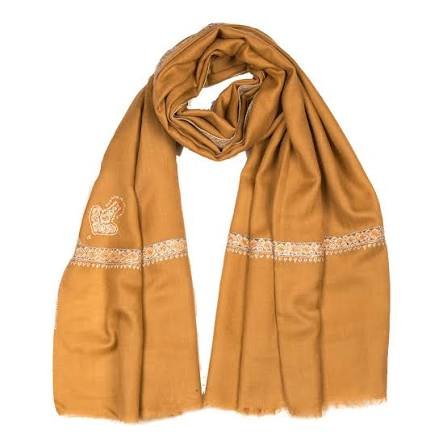
Look carefully at how the shawl terminates at the ends. On a genuine handwoven piece, the fringes are simply the loose, exposed warp threads running out directly from the loom. They are soft, slightly irregular, and feature what weavers call an “eyelash finish.”
Viscose shawls, because they are cut out from massive machine-woven rolls, cannot leave raw edges without unraveling completely. Therefore, fake viscose shawls almost always feature machine-stitched hems, or thick, perfectly braided, and knotted artificial tassels glued to the borders.
Sensory Showdown: What Does Real Kashmiri Pashmina Feel Like?
If you want to train your hands to recognize luxury, you must understand exactly what does real kashmiri pashmina feel like when placed against your skin.
Many shoppers believe that if a shawl is expensive, it must feel as slippery as butter or satin. This is a massive misconception! Pure animal hair has an organic texture; it is incredibly soft and light, but it possesses a slightly “dry” and comforting grip. It is plush, airy, and gently matte. When you drape it over your shoulders, it stays in place without sliding off or shifting when you walk.
Real Pashmina ───► Soft, Organic, "Dry" Grip ───► Stays securely in place on shoulders
Fake Viscose  ───► Slick, Ultra-Slippery Finish ──► Constantly slides off and shifts
Viscose, by contrast, feels cold and unnaturally slick. It has an ultra-slippery finish that lacks the natural elasticity and warmth of animal hair. If you wrap a viscose shawl around your neck, it will feel heavy, drop flat, and constantly slide off your shoulders, requiring safety pins or brooches to stay secure.
Furthermore, real animal fibers adapt to your body temperature within 15 seconds, creating a cozy pocket of breathable warmth. Viscose is a poor insulator; it will feel chilly when you first put it on, and if the room warms up, it traps body sweat, making you feel sticky, humid, and uncomfortable.
At-Home Tie-Breakers: Burn Test vs Ring Test
If you have already purchased a piece and are feeling anxious about its authenticity, it’s time to run the two classic home verification tests.
The Friction Static Test
Synthetic and semi-synthetic fibers like viscose and polyester are notorious for building up high static electricity charges in dry weather.
- The Action: Rub a corner of the shawl against itself or a plastic ruler rapidly for 10 seconds in a dark room.
- The Verdict: If you hear tiny crackling sounds, notice the fabric clinging tightly to your arm hairs, or find it attracting dust particles like a magnet, it is fake viscose. Pure pashmina will remain completely calm and static-free.
The Ultimate Burn Test
When you need absolute, undeniable proof, look no further than the pashmina burn test vs ring test. While a clever viscose wrap can pass the ring test by being spun very thin, it can never rewrite the laws of chemistry during a burn test.
Pluck a single loose thread from the fringe of your shawl, hold it safely with metal tweezers over a ceramic plate, and light it with a matchstick.
[ Real Pashmina Thread ] ──► Burns slowly ──► Burnt Hair Odor ──► Crumbles to Powder
[ Fake Viscose Thread  ] ──► Burns rapidly ──► Burnt Paper Odor ──► Leaves Minimal Ash
- Pashmina Result: Because it is an animal protein fiber rich in keratin, it will burn slowly, smell exactly like burnt human hair, and leave a fragile black ash that completely crumbles into a fine powder when touched between your fingertips.
- Viscose Result: Because viscose is derived from plant cellulose, it burns incredibly fast with a bright flame. It will smell exactly like burning newspaper or autumn leaves and leave behind virtually zero ash, or a tiny, flat, non-crushable grey residue.
Setting Expectations: The Reality of Pricing in India
Let’s talk numbers, because price is often the quickest way to filter out fraudulent sellers.
The extensive manual labor required to comb, spin, weave, and wash a single authentic piece naturally commands a premium. The original pashmina shawl price in India for a baseline, solid-colored plain shawl starts at roughly ₹8,000 to ₹10,000. If the shawl features intricate hand-embroidery, the prices can climb into tens or lakhs of rupees.
Viscose yarn is cheap, mass-produced by the metric ton, and woven on mechanical looms that turn out dozens of shawls an hour. A high-quality viscose wrap costs just ₹300 to ₹800 to manufacture. Even with a boutique markup, selling a “Pashmina” for ₹1,500 to ₹3,000 is an immediate sign of a synthetic substitute.
Shopping Advice: Genuine luxury never goes on a 70% discount at local transit markets. If the deal feels too good to be true, you are paying a luxury price for glorified wood pulp.
The Ultimate Shield: Look for the GI Tag Certification
If you want absolute peace of mind while shopping anywhere in India, look for the government-approved Kashmir Pashmina GI Tag (Geographical Indication).
┌────────────────────────────────────────────────────────┐
│               GOVERNMENT OF INDIA - GI TAG             │
│  [ Laser Secure Hologram ]   Serial No: J&K/09/GI/2026 │
│  • 100% Pure Changthangi Cashmere Wool From Ladakh      │
│  • Certified Hand-Spun & Handwoven in Kashmir Valley   │
└────────────────────────────────────────────────────────┘
This special, secure label is attached directly to the shawl after undergoing strict laboratory evaluation by the Craft Development Institute in Srinagar. The label features a secure laser hologram and a unique identification number.
When you purchase a GI-tagged shawl, you are legally guaranteed that the product is made from pure, sub-15 micron wool sourced from Ladakh, spun entirely by hand, and woven on traditional handlooms. Viscose power-loom fabrics can never qualify for this tag, making it your ultimate shield against counterfeit items.
Conclusion: Value the Art, Avoid the Counterfeit
There is nothing wrong with buying a viscose wrap if you are simply looking for a lightweight, stylish fashion accessory for a casual evening out. It is a versatile fabric in its own right.
However, the problem arises when dishonest vendors mislabel cheap viscose to mimic the prices of heritage luxury craftsmanship. By mastering how to check pure pashmina vs viscose yarn structure, looking for organic matte finishes instead of synthetic metallic gloss, and checking for official trust markers like the GI tag, you protect yourself from falling victim to these scams.
A genuine Kashmiri Pashmina is more than just winter clothing—it is an investment in human heritage, a tribute to the resilient herders of Ladakh, and a masterpiece that will warm your family for decades to come. Shop smart, ask the right questions, and choose authentic art every single time!
Frequently Asked Questions (FAQs)
1. Can a shawl be a blend of both pashmina and viscose?
Yes, many commercial manufacturers weave blended shawls (often a 50/50 split) to lower costs while keeping the fabric soft. However, these must be explicitly labeled as “Blended Wraps.” Selling a viscose blend under the name “100% Pure Pashmina” is an illegal trade practice.
2. Does real pashmina fabric lose its softness after washing?
An authentic handwoven shawl actually becomes softer, fluffier, and more comfortable with age and proper washing. If your shawl feels stiff, rough, or takes on a coarse texture after a single gentle wash, it is likely a synthetic imitation treated with temporary industrial chemical softeners that washed away in the water.
3. Why is my pure pashmina shawl pilling so quickly?
Do not worry! Because pure pashmina wool is made of incredibly short, fine, natural animal hairs spun gently by hand, minor surface pilling is a completely normal characteristic during its initial wear cycle. Viscose or polyester threads are long, continuous filaments that rarely pill initially, meaning a lack of pilling on a fuzzy winter wrap is often a sign of synthetic reinforcement.
Did this showdown help you evaluate your winter collection? Let us know your thoughts or share your home burn test stories in the comments section below! Don’t forget to share this guide with your family to keep them safe from online shopping scams.
See Also
How to Identify Pure Pashmina Shawl at Home: The Complete 6-Step Checklist
Pure Pashmina shawl – Real Vs Fake | Cashmere