
What is Original Pashmina Shawl Price in India Standard Rate ? Let’s picture this: You are walking down a vibrant, bustling handicraft market in Connaught Place in Delhi, Colaba Causeway in Mumbai, or right along the banks of the Dal Lake in Srinagar. A charming shopkeeper ushers you into his store, spreads a cloud-soft fabric over your shoulders, and says, “Madam, for you, special discount. Pure Kashmiri Pashmina, only ₹2,500!”
It feels like an absolute steal, right? You pay the money, fly home, and feel like a master negotiator.
But here is the cold truth: you didn’t just buy a genuine hand-spun, handwoven masterpiece. You bought a mass-produced acrylic or viscose imitation that was whizzed out of an industrial powerloom in under twenty minutes.
When you want to purchase a luxury item like an authentic heirloom, going in blindly is an invitation to get swindled. To protect your wallet, you need to establish a firm mental budget before stepping into any store. This comprehensive guide breaks down the true original pashmina shawl price in India standard rate for 2026, equipping you with the pricing transparency you deserve.
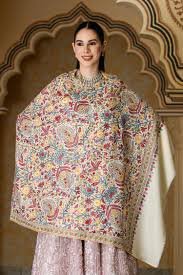
The 2026 Fair Price Transparency Index
The easiest way to spot a counterfeit is to realize that true craftsmanship carries a fixed minimum cost of production. Genuine yarn, artisan hours, and traditional hand-looming cannot be discounted to pavement-side prices.
To help you shop with absolute confidence across India, here is the current, audited market-rate index for authentic varieties.
| Shawl Variety | Expected Minimum Price Range (INR) | Production Time |
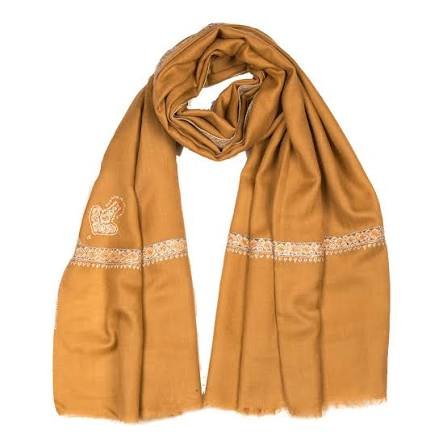
| Solid/Plain Pashmina Stole | ₹7,500 – ₹10,000 | 3–4 Days |
| 70/30 Cashmere Silk Wrap | ₹5,500 – ₹8,000 | 2–3 Days |
| Hand-Embroidered Sozni border | ₹18,000 – ₹45,000 | 2–4 Months |
| Authentic Kani Weave Shawl | ₹65,000 – ₹2,500,000 | 6 Months – 3 Years |
The Golden Shopping Rule: If any showroom or boutique retailer offers you a “100% pure, handmade Kashmiri Pashmina shawl” for anything less than ₹7,000, walk away immediately. It is physically, mathematically, and economically impossible to produce a genuine handwoven shawl for less than that standard floor price.
Why Are Kashmiri Pashmina Shawls So Expensive Compared to Normal Wool?
To understand the original pashmina shawl price in India standard rate, we have to discard the idea that Pashmina is just “high-grade sheep’s wool.” It isn’t. Comparing standard sheep’s wool to authentic Cashmere is like comparing a basic cotton t-shirt to premium mulberry silk. They belong to entirely different universes of luxury.
To understand why these prices are justified, let’s pull back the curtain on the hyper-local supply chain that feeds this heritage industry.
1. Sourcing at 14,000 Feet: The Ladakhi Changpa Herders
True Pashmina does not come from regular sheep down on the plains. It is harvested exclusively from the underfleece of the Changthangi goat (the Pashmina goat), which lives in the high-altitude, sub-zero terrain of the Changthang plateau in Ladakh.
To survive the brutal winters where temperatures plunge below minus forty degrees, these goats grow a microscopic, ultra-fine undercoat beneath their thick outer hair.
[ CHANGTHANG PLATEAU, LADAKH ] 🏔️ (14,000+ Feet, -40°C Winters)
                 │
                 ▼
     [ CHANGTHANGI GOAT UNDERCOAT ] 🐐 (Rare Fleece Generation)
                 │
                 ▼
  [ NOMADIC CHANGPA HERDERS ] 🖐️ (Manual Spring Combing)
                 │
                 ▼
[ CRITICAL RAW FIBER LIMIT ] ⚖️ (Only 150g usable yarn per goat!)
In the spring, the nomadic Changpa herders manually comb out this precious underfleece. Each goat yields a tiny amount—roughly 150 grams of usable clean fiber per year. It takes the annual fleece production of four to five goats just to gather enough yarn for a single, plain standard-size shawl!
2. The Microscopic Metric: Pure Micron Count
Standard commercial wool fibers generally measure anywhere between 24 to 40 microns in thickness. Cheap merino wool might get down to 18 or 20 microns.
The Fiber Breakdown: Authentic Kashmiri Pashmina measures an astonishing 12 to 15 microns.
To put that into perspective, a strand of human hair averages around 75 microns. Because the individual threads are so unbelievably fine, they are incredibly fragile. They simply cannot withstand the violent, high-speed tension of industrial factory machines. If you feed authentic, hand-spun raw yarn into a modern powerloom, the machine will snap the threads instantly.
3. The Unforgiving Chronology of Human Labor
Because industrial machinery is out of the question, every step of processing must happen through human hands.
- Hand-Spinning (Charkha): Local Kashmiri women clean the raw wool, sort the fibers, and spin them onto traditional wooden wheels. It takes days of intense, eye-straining work just to spin a few grams of uniform yarn.
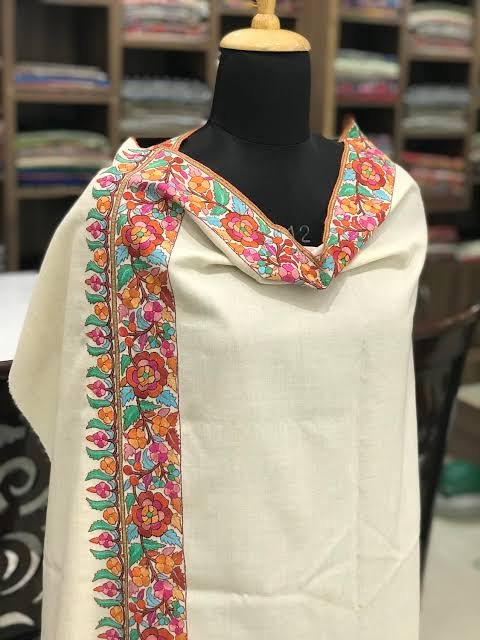
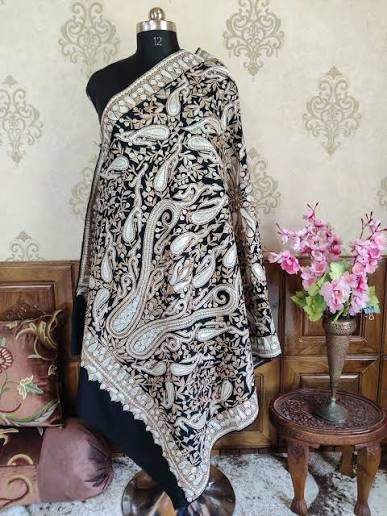
- The Artisan Wages Per Knot: For embroidered varieties like the Sozni border or a full Jamawar masterpiece, a master needle-worker sits cross-legged for hours every single day, applying thousands of microscopic hand-knots using specialized needles.
- The Kani Masterpieces: For the legendary Kani weave shawls, the design isn’t embroidered onto the fabric later. Instead, the pattern is meticulously built directly into the structural weave matrix of the shawl itself, using tiny wooden spools called Kanis. The artisan follows an ancient, coded script called the Talim—which functions like a poetic, handwritten musical score for weaving. A single centimeter of progress can take an entire day of uninterrupted concentration.
When you purchase an authentic piece, you aren’t paying a premium for a fancy corporate fashion brand label. You are paying a fair, direct wage for months of intensive human dedication, historical knowledge, and the hard-earned physical labor of Ladakhi herders and Kashmiri artisans.
Smart Bargaining: Navigating the Showrooms of Delhi and Mumbai
Armed with the original pashmina shawl price in India standard rate, you can effortlessly take control of your shopping experience. When a dealer realizes you understand the true value of production tiers, their attitude changes instantly.
Instead of treating you like a gullible tourist to be overcharged, they will treat you like an appreciative connoisseur. Always look for the official government-backed Geographical Indication (GI) tag attached via a tamper-proof seal, type the unique serial registry code into the state checking system, and ensure that the price you are paying mirrors the immense, authentic artistry held within the fabric.
See Also
How to Identify Pure Pashmina Shawl at Home: The Complete 6-Step Checklist
100%Original Pashmina Shawls,Suits,Pherans at Wholesale Price in Kashmir