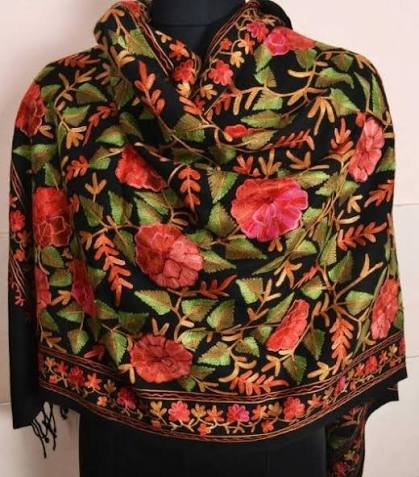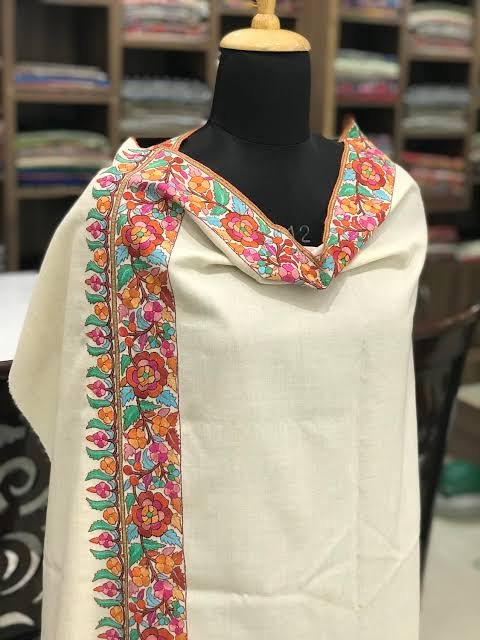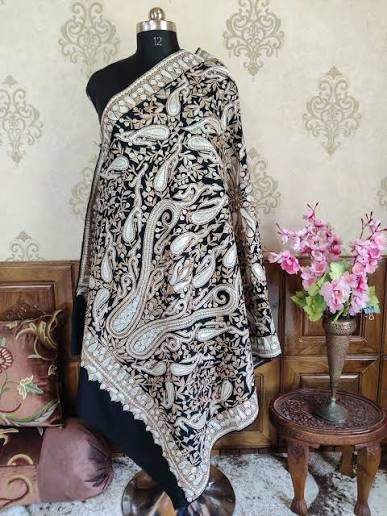

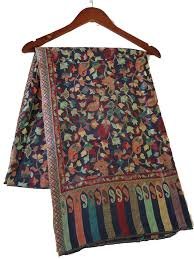
Imagine holding a fabric so incredibly soft that it feels like a warm embrace from a cloud, yet it features a pattern as complex and vibrant as a Mughal miniature painting. You trace the intricate floral vines and paisley motifs with your fingers, wondering how many months of human life were poured into weaving it.
Welcome to the world of the legendary Kani shawl—the absolute crown jewel of Kashmiri textile heritage. How Much Does a Real Kani Shawl Cost?
Historically draped over the regal shoulders of emperors like Akbar, European monarchs like Queen Victoria, and the elite aristocrats of the French court, a genuine Kani is not just clothing. It is an investment asset, a museum-grade textile masterpiece, and a brilliant testament to human endurance.
But if you are a high-net-worth collector looking to add this legendary textile to your personal heirloom treasury, you have probably run into a confusing maze of prices. Walk into an upscale showroom in South Delhi or Colaba in Mumbai, and you might see “Kani design” wraps selling for ₹3,000, while right next to them sits an authentic masterpiece priced at ₹3,00,000.
So, let’s cut through the market noise. How much does a real kani shawl cost exactly, and what makes this ancient, mythical weave worth every single rupee?
The Mythical Weave: Decoding the Magic of Kanis and the Talim Script
To understand the price tag of a genuine masterpiece, you first have to understand the mind-boggling complexity of its creation. A traditional Kani shawl is not embroidered with a needle after the fabric is ready, nor is it patterned on a mechanical loom. The breathtaking artwork is actually built directly into the physical structure of the fabric while it is being woven.
[ THE ARTISAN WEAVING MATRIX ]
============================================================
 MASTER WEAVER  ---> Reads aloud the rhythmic "Talim" script code
                      (e.g., "Two threads of saffron, lift four, cross...")
      │
      ▼
 LOOM ARTISANS  ---> Interlock fine colored threads using "Kanis"
                      (Eyeless wooden spools instead of traditional shuttles)
============================================================
Result: The complex pattern becomes the structural backbone of the fabric.
Instead of a standard weaving shuttle that runs all the way across a loom, the artisan utilizes dozens—sometimes hundreds—of tiny, eyeless wooden needles or spools made of forest cane, called kanis. Each individual kani is pre-wound with a different color of organic yarn.
But how do the weavers know which color goes where to create a flawless, mirror-image design? They don’t look at a painted drawing or a digital blueprint. Instead, they follow the Talim—an ancient, highly sophisticated coded script written by a master pattern-writer.
The Talim looks like a cryptic musical score or a complex mathematical formula. It translates the visual motif into a rhythmic, poetic shorthand code dictating the exact number of warp threads to lift and the precise color spool to interlock. As one master weaver reads the code aloud in a singsong cadence, the artisans at the loom rapidly move their fingers, weaving the colored threads into the warp. It is a live, hypnotic ballet of mathematics, music, and physical dexterity.
Why Kani Shawl Costs Are Exceptionally High
When calculating how much does a real kani shawl cost, the final market price strictly reflects three uncompromising structural variables: extreme production time, ultra-rare materials, and generational capital appreciation.
- 1. Speed: A highly skilled master weaver finishes just 1 inch of progress per day on an intricate, all-over Jamawar design. Because a standard full-size shawl spans roughly 80 inches in length, a single item demands anywhere from 6 months to 3 full years of uninterrupted, daily manual labor by two artisans working in perfect harmony at the loom.
- 2. Materials: Authentic pieces utilize exclusively sub-14 micron Changthangi goat wool manually combed from the underfleece of indigenous herds grazing at 14,000 feet on the frozen Ladakhi plateaus. This rare fiber is so exceptionally fine and structurally delicate that it cannot withstand the mechanical tension of powerloom shuttles; it must be spun and woven purely by human hands.
- 3. Heirloom Value: Because each creation is a unique, unrepeatable piece of cultural art that requires months of human life to construct, its market value appreciates over generations like physical gold. As fewer young artisans take up this incredibly intensive, vision-straining craft, the global supply of real handwoven items is actively shrinking, driving long-term collector value straight upward.
The Price Matrix: How Much Does a Real Kani Shawl Cost in 2026?
Because the density and complexity of the design determine the sheer volume of labor required, authentic handwoven pieces fall into clear commercial pricing tiers.
+--------------------------------------------------------------------------+
| 💰 THE 2026 GENUINE KANI PRICE INDEX (INR)                               |
+--------------------------------------------------------------------------+
|                                                                          |
| 🔳 [ Palla/Border Design ]  =================> ₹65,000 to ₹95,000        |
|    (Weaving restricted to the end panels; plain solid center body)      |
|                                                                          |
| 💠 [ Half-Jaal / Half-Body ] ================> ₹1,10,000 to ₹1,80,000    |
|    (Intricate motifs spreading beautifully halfway across the canvas)     |
|                                                                          |
| ⚜️ [ Full Jamawar / All-Over ] ============> ₹2,50,000 to ₹25,000,000+  |
|    (A breathtaking, dense field of patterns covering every single inch)  |
|                                                                          |
+--------------------------------------------------------------------------+
| ⚠️ Warning: Anything under ₹40,000 is almost certainly a powerloom copy! |
+--------------------------------------------------------------------------+
If you are quoted a price below these standard baselines for a “pure cashmere hand-loomed item,” you are facing a factory imitation.
How to Spot a Fake Machine-Printed Kani Print Shawl
As digital industrial machinery has evolved, manufacturers in Surat, Amritsar, and overseas textile hubs have flooded retail stores with cheap, mass-produced lookalikes. These factory products use synthetic materials like viscose, polyester, or rough, chemically treated sheep’s wool to mimic the appearance of luxury wraps.
To ensure you don’t get swindled while hunting for a genuine heirloom piece, keep this practical checklist handy to evaluate the item right inside the showroom.
1. The Reverse Side Architecture
The absolute easiest way to expose a machine-made imitation is to simply flip the fabric over and study its backside structure.
- The Authentic Handwoven Reality: Because the weaver uses separate small cane spools for each individual color patch based on the Talim script, you will see clean, neat little knots and tiny fragments of yarn hanging where colors break and interlock. It looks like a complex, fascinating web of miniature manual connections.
- The Powerloom Jacquard Fake: Machine looms cannot duplicate this precise interlocking technique. Instead, they run the colored yarns continuously across the entire width of the fabric. To hide the extra yarn, industrial factories use mechanical cutters to clip the loose threads. When you look at the back of a machine-made copy, you will see thousands of perfectly even, fuzzy, bristly cut threads that feel stiff and prickly to the touch.
- The Digital Print Fraud: Some ultra-cheap fakes are simply white fabrics with the pattern digitally printed right onto the surface. Flip it over, and the back side will look completely pale, blank, or washed-out, with the ink failing to saturate through the textile fibers.
2. Microscopic Symmetry vs. Organic Minor Imperfections
Machines operate with absolute, flawless mathematical precision. Human beings, even the most legendary master artisans, do not.
When you examine a machine-printed or powerloom-woven item, every single leaf, floral petal, and paisley border motif will look structurally identical down to the fraction of a millimeter. The lines are rigidly sharp, geometric, and perfectly uniform.
An authentic hand-loomed piece features a subtle, organic soul. Because the weavers interpret a handwritten script line by line over many months, you will spot minute, charming variations in the thickness of a leaf line or a tiny shift in a color boundary. These microscopic irregularities do not lower the value; they serve as the authentic fingerprint of genuine human hands.
3. The Structural Fringe Test
Look closely at the fringes at the loose ends of the shawl.
On a genuine handwoven Pashmina, the warp threads running through the body of the fabric continue naturally outwards to form the fringe. They are gently hand-twisted or left open.
On factory-made synthetic imitations, the fringes are frequently stitched on separately as an extra decorative border, or the edges are sharply bound and machine-overlocked because the synthetic fabric would otherwise instantly unravel.
Investing in Living Art
When you finally decide to acquire a certified heirloom piece, you aren’t simply purchasing an item for your wardrobe. You are acting as a vital patron of an endangered, world-class art form that has survived for over four centuries against all odds.
By understanding how much does a real kani shawl cost and insisting on buying only verified, hand-loomed items with official government Geographical Indication (GI) registry protection, you ensure that your investment bypasses deceptive middlemen. Instead, your resources go directly toward sustaining the legendary master weavers of the Kashmir Valley, keeping this mythical heritage alive for generations to come.
See Also
Kashmir’s Kani Shawls: A Priceless Legacy Showcased at World Craft Forum
Original Pashmina Shawl Price in India Standard Rate: Your Price Guide 2026