Buying a Pashmina shawl in India can feel like a mini exam. One showroom says “100% pure Pashmina.” Another says “original Kashmiri Pashmina.” A third one says “Madam, ring test kar lo.” And honestly, when you are standing in a Delhi, Mumbai, Jaipur or Srinagar showroom with a soft shawl in your hand, it is very hard to know what is real and what is clever marketing.
That is where the kashmir pashmina gi tag lookup becomes useful.
A genuine GI-certified Kashmir Pashmina is not supposed to depend only on the seller’s promise. It should come with a traceable authentication label, a QR-based seal and a unique number that helps you check whether the product has actually gone through the certification process.
This blog is a simple, India-friendly guide for buyers who want to avoid fake Pashmina shawls. We will explain what the GI tag means, what the physical seal looks like, how to use the online lookup, what red flags to watch for, and what to ask the seller before paying.
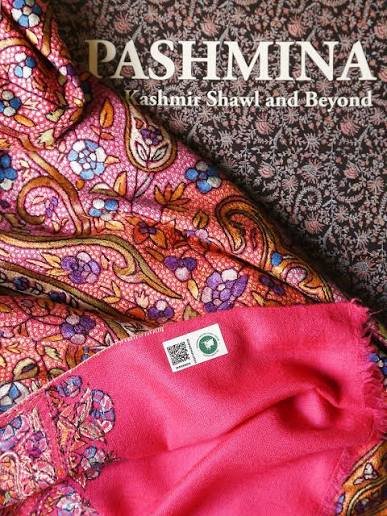
What Is the GI Tag for Kashmir Pashmina?
GI stands for Geographical Indication. In simple words, a GI tag protects products that are strongly linked to a particular region, tradition, skill and reputation. Darjeeling Tea, Banarasi Saree, Kanchipuram Silk and Kashmir Pashmina are examples of products where origin matters.
For Kashmir Pashmina, the GI tag is not just a fancy sticker. It protects a very specific craft tradition. A GI-certified Kashmir Pashmina should meet important conditions related to fibre, hand-spinning, hand-weaving and region.
The idea is simple: if a shawl is being sold as “Kashmir Pashmina,” it should actually match the craft standards associated with Kashmir Pashmina. Otherwise, anyone could sell wool, silk blend, acrylic or machine-made fabric as “pure Pashmina” and confuse customers.
This is why the kashmir pashmina gi tag lookup is so important. It gives buyers a practical way to move beyond sales talk and check the label themselves.
Why Indian Buyers Need to Be Careful
Let’s be honest. The Pashmina market has a lot of confusion.
Many products are sold with names like:
- Cashmere feel shawl
- Pashmina touch stole
- Kashmiri style shawl
- Semi-Pashmina
- Viscose Pashmina
- Wool Pashmina blend
- Machine-made Pashmina
- Imported Pashmina
Some of these may be beautiful products in their own category, but they are not the same as genuine GI-certified Kashmir Pashmina.
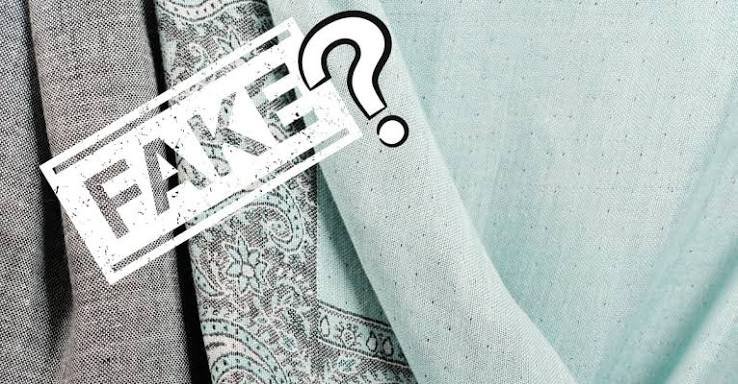
The problem starts when sellers use the word “Pashmina” very loosely. A buyer may pay premium rates thinking they are buying authentic Kashmiri Pashmina, but later discover that the shawl is a blend, synthetic, powerloom-made or not traceable at all.
That is why you should not only ask, “Is this pure Pashmina?” You should also ask, “Can I do a Kashmir Pashmina GI tag lookup for this piece?”
Featured Snippet: What Does a Genuine Kashmir Pashmina GI Seal Look Like?
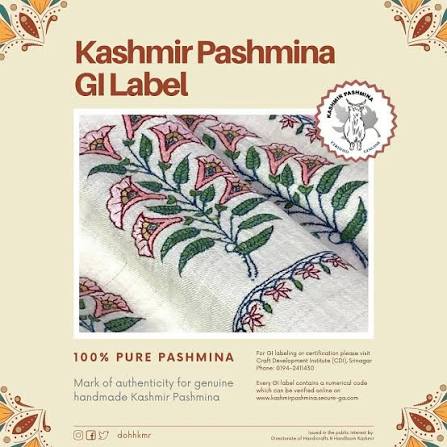
A genuine Kashmir Pashmina GI seal is a QR-based authentication label attached to the finished shawl, stole, muffler or scarf. The official label is rectangular, carries the words “Kashmir Pashmina,” shows the registered GI logo, and includes a unique visible number. It is designed as a “break to remove” label, meaning it should not be casually detachable and reusable. The QR-readable information may include registered GI details, product code, material, design, size, authorised user details, artisan details and craft description.
In plain English: the seal should not look like a random shop tag. It should look like an authentication label with a QR code or unique number that can be checked.
The Two Things You Must Look For: Secure Tag and Unique Code
Before you fall in love with the softness, embroidery or colour, pause for 30 seconds and check the label.
1. The Secure GI Authentication Tag
The GI label should be attached to the product. It should not be casually handed to you separately in a plastic pouch. It should not look like a loose printed card that can be attached to any shawl.
A genuine authentication label is meant to be placed on a finished good after testing and verification. This matters because a separate card is easier to misuse. A proper seal is harder to shift from one item to another.
When you inspect the shawl, look for:
- “Kashmir Pashmina” text
- Registered GI logo
- QR code
- Unique number
- Secure or break-to-remove nature
- Proper placement on the product
If the seller says, “Tag is at home,” “Tag will be given later,” or “All our items are genuine but we don’t use tags,” treat that as a warning sign.
2. The Unique Number or Code
The second thing is the unique number. This number is what makes the kashmir pashmina gi tag lookup possible.
The unique number should not look handwritten. It should be printed as part of the official authentication label. You can use this number or scan the QR code to check the product’s authenticity through the official verification system.
Do not accept vague answers like, “Madam, original hai, trust me.” A serious seller should be comfortable with you checking the code.
How to Use the Kashmir Pashmina GI Tag Lookup Online
Now let’s come to the practical part. You are in a showroom. You like a shawl. The price is high. The seller says it is original. What should you do?
Use this step-by-step process.
Step 1: Ask for the GI Tag Before Discussing Final Price
Before negotiating, ask politely:
“Is this GI-certified Kashmir Pashmina? Can I see the GI tag and QR code?”
This one question changes the conversation. A genuine seller will usually show the tag confidently. A doubtful seller may start giving stories.
Possible excuses include:
- “GI tag is not needed.”
- “This is old stock.”
- “We are famous, you can trust us.”
- “Tag makes the shawl expensive.”
- “QR code does not work sometimes.”
- “This is export quality, no tag required.”
Some genuine old pieces may not have modern QR labels, but if you are paying premium rates today for a new GI-certified product, you should ask for proper proof.
Step 2: Open the Camera or QR Scanner on Your Phone
Most smartphones can scan a QR code directly through the camera. If your camera does not scan automatically, use a trusted QR scanner app.
Hold your phone steady over the QR code. Make sure there is enough light. If the shawl is folded, ask the seller to place the tag flat so that the code is visible.
A proper kashmir pashmina gi tag lookup should not require complicated technical knowledge. It should be possible for a normal buyer to scan and check basic details.
Step 3: Check the Website or Verification Page
After scanning, your phone should open the verification page or tracking link associated with the authentication label. In some cases, you may need to enter the unique number manually.
Check whether the page loads properly and whether the details match the shawl in your hand.
Look for details such as:
- Product category
- Material
- Size
- Craft description
- Authorised user details
- Artisan details, where available
- Certification or label information
Do not rush this step. If you are spending ₹10,000, ₹25,000, ₹50,000 or more, two minutes of checking is completely reasonable.
Step 4: Match the Online Details with the Physical Shawl
This is very important. Do not only check whether the code opens. Check whether the details match the actual product.
For example:
- If the online record says stole, but the seller is showing a large shawl, ask why.
- If the material description does not match what the seller claimed, ask for clarity.
- If the product size is different, pause.
- If the code looks already used for another product, be careful.
- If the seller refuses to let you check peacefully, walk away.
The kashmir pashmina gi tag lookup is not just about scanning. It is about matching the code, product and seller’s claims.
Step 5: Ask for a Proper Bill
Even after the GI lookup, ask for a proper invoice or bill. The bill should mention what you are buying clearly.
Ask the seller to write:
- Kashmir Pashmina
- GI-certified, if applicable
- Product type: shawl, stole, scarf or muffler
- Price
- Date
- Shop details
- GST details, where applicable
A vague bill saying “shawl” or “cloth item” is not ideal when you are buying a premium product.
Can the Lookup Show the Artisan’s Name and Village?
This is a common question. The QR-readable label information is designed to carry details such as authorised user details, artisan details and craft description. Depending on how the record is maintained and displayed, you may be able to see artisan or producer-related information.
However, do not assume that every lookup will always show a full artisan name, exact village and complete life story. Sometimes the page may show authorised user details or certification details rather than a long artisan profile.
So the practical rule is this: use the kashmir pashmina gi tag lookup to check whether the piece is traceable and whether the details match the product. If the page shows artisan details, great. If it shows authorised user details instead, ask the seller to explain the connection.
A transparent seller should not get irritated by this question.
What If the QR Code Does Not Work?
Sometimes QR codes fail because of poor internet, bad lighting, damaged tag, scanner issue or server downtime. Do not panic immediately. Try these steps:
- Move to better light.
- Clean the camera lens.
- Scan again slowly.
- Type the unique number manually, if possible.
- Ask the seller to open the verification page.
- Try mobile data instead of showroom Wi-Fi.
- Take a clear photo of the tag for later checking.
But if the seller becomes defensive, refuses to share the number, or says checking is unnecessary, that is a red flag.
A genuine seller may say, “Network is slow, please try again.” A doubtful seller may say, “Why are you checking so much?”
GI Tag vs Shop Certificate: What Is the Difference?
Many shops give their own certificate. It may say “pure Pashmina,” “original Kashmir,” or “100% handmade.” But a shop certificate is not the same as a GI authentication label.
A shop certificate is issued by the seller. A GI authentication label is connected to the official certification and verification system.
That does not mean every shop certificate is fake. Some good sellers provide both their own invoice and official GI authentication. But if you are buying specifically because the seller claims it is GI-certified Kashmir Pashmina, then ask for the GI tag and do the kashmir pashmina gi tag lookup.
Remember this line: a certificate printed by the shop supports the sale, but the GI lookup supports the authenticity claim.
How Fake Sellers Try to Confuse Buyers
Fake or careless sellers often use emotional and vague language. They may say:
- “This is from my family artisan.”
- “We supply to big showrooms.”
- “No one gives GI tag at this price.”
- “This is pure but not certified.”
- “Certification is only for foreigners.”
- “You can do ring test, no need QR.”
- “Madam, asli Pashmina ko tag ki zaroorat nahi hoti.”
Some of these lines sound convincing, especially when the seller speaks confidently. But your response should be simple:
“I understand, but since I am paying for genuine Kashmir Pashmina, I want to check the GI tag.”
You are not being rude. You are being a smart buyer.
Is the Ring Test Enough?
The ring test is popular in India. The idea is that a very fine Pashmina shawl can pass through a ring. But this test is not enough.
Why?
Because many lightweight fabrics can pass through a ring. Also, embroidered shawls, thicker weaves, Kani work or heavier pieces may not pass easily even if they are genuine. The ring test may tell you something about fineness and softness, but it cannot prove GI certification.
The kashmir pashmina gi tag lookup is more useful because it checks traceability, not just softness.
Is the Burn Test Safe?
The burn test is also common. People burn a small thread and smell it to identify animal fibre. But please be careful. Do not burn a thread inside a showroom without permission. Also, the burn test may damage the product and is not practical for most buyers.
For normal shoppers, the safer order is:
- Check GI tag
- Scan QR code
- Match product details
- Check invoice
- Inspect weave and feel
- Ask about return or exchange policy
Use destructive tests only with caution and only on a loose thread, if the seller permits it.
How to Check a Pashmina Shawl in a Delhi or Mumbai Showroom
Let us imagine you are standing in a premium showroom in Delhi, Mumbai, Bengaluru or Jaipur.
Here is exactly what you can say:
“Can you please show me the GI tag for this Kashmir Pashmina?”
Then say:
“I would like to scan the QR code and do a Kashmir Pashmina GI tag lookup before finalising.”
If the seller agrees, scan and check. If the seller resists, ask:
“Is this GI-certified, or is it only Pashmina-style?”
This question is very powerful. It gives the seller space to be honest. Maybe the item is a wool-silk blend. Maybe it is machine-made. Maybe it is Kashmiri-style but not GI-certified. That is okay if the price reflects it. The problem is paying GI-certified prices for a non-certified product.
What Details Should Match Before You Buy?
Before payment, make sure these things are consistent:
- Seller’s claim
- GI tag text
- QR code result
- Product category
- Material description
- Size
- Craft description
- Invoice wording
- Price level
- Seller explanation
If five things say “GI-certified Kashmir Pashmina” but the bill says only “ladies shawl,” ask the seller to correct the bill.
Red Flags That Suggest Fake or Misleading Pashmina
Be alert if you notice:
- No GI tag on a premium “pure Pashmina” claim
- Loose tag not attached to the product
- QR code not shown clearly
- Unique number hidden or scratched
- Seller refuses online verification
- Very low price for “100% pure Pashmina”
- Overly shiny synthetic look
- Machine-perfect weave with no handmade character
- No proper bill
- Vague words like “Pashmina feel” or “semi-Pashmina” sold as pure Pashmina
Cheap is not always fake, and expensive is not always genuine. But if the story, label and price do not match, slow down.
Buyer Checklist Before Paying for a GI-Certified Pashmina
Use this quick checklist before you buy:
- I have seen the GI authentication label
- The label is attached to the finished product
- The label has “Kashmir Pashmina” text
- The label has a QR code or unique number
- I have scanned the QR code
- The online details match the product
- The seller allowed verification without pressure
- The product type and size make sense
- I received a proper invoice
- The invoice mentions Kashmir Pashmina clearly
- I understand the return or exchange policy
- I am not relying only on the ring test
- I am not relying only on shop certificate
If all of this is clear, you can buy with far more confidence.
Final Thoughts: Trust the Tag, Not Just the Talk
A real Pashmina shawl is not just a winter accessory. It carries fibre knowledge, hand-spinning, weaving skill, Kashmiri heritage and artisan labour. That is exactly why fake Pashmina is such a big problem. When fake products flood the market, buyers lose money and genuine artisans lose respect.
The good news is that buyers now have better tools. The kashmir pashmina gi tag lookup helps you check the product before you buy. You do not need to be a textile expert. You just need to ask for the tag, scan the QR code, match the details and insist on a proper bill.
Next time you are in a showroom and someone says, “Madam, this is original Pashmina,” smile and say:
“Great. Please show me the GI tag. I’ll just verify it once.”
That one sentence can save you from a fake purchase.
FAQs on Kashmir Pashmina GI Tag Lookup
1. What is Kashmir Pashmina GI tag lookup?
Kashmir Pashmina GI tag lookup is the process of checking the QR code or unique number on a GI-certified Kashmir Pashmina authentication label to verify product details online.
2. Does every real Pashmina shawl have a GI tag?
A GI-certified Kashmir Pashmina should have the official authentication label. However, older pieces or non-certified handmade items may not have the modern label. If you are paying for GI-certified Pashmina, ask for the tag.
3. What does the GI tag prove?
The GI tag shows that the product has passed through the prescribed certification and labelling process for Kashmir Pashmina. It supports authenticity, traceability and buyer confidence.
4. Can a fake shawl have a fake GI tag?
Yes, fake labels are possible in any market. That is why you should not only look at the tag but also scan the QR code or check the unique number online.
5. What should I do if the QR code does not scan?
Try better lighting, mobile data, manual number entry or ask the seller to help. If the seller refuses verification or gives excuses, be careful.
6. Is the ring test better than GI verification?
No. The ring test may show fineness, but it does not prove GI certification. The Kashmir Pashmina GI tag lookup is a stronger fraud-prevention step.
7. Can I check the GI tag while standing inside a showroom?
Yes. That is the whole point. You can scan the QR code on your phone before buying, whether you are in Delhi, Mumbai, Srinagar, Bengaluru or any other city.
8. Should the bill mention GI-certified Kashmir Pashmina?
Yes, if the seller is claiming the product is GI-certified, ask them to mention Kashmir Pashmina clearly on the invoice.
9. What if the seller says GI tag is not needed?
Ask whether the product is GI-certified or simply Pashmina-style. If they are charging premium rates but cannot show proof, reconsider the purchase.
10. Is GI-certified Pashmina always expensive?
Genuine handspun and handwoven Kashmir Pashmina is labour-intensive, so it usually costs more than synthetic or blended shawls. Very low prices should be checked carefully.
See Also
Buying Pashmina? Here’s How to Identify the Real
How to Identify Pure Pashmina Shawl at Home: The Complete 6-Step Checklist