
Introduction: A Fibre That Travels Across the Himalayas
When we hold a soft Kashmiri Pashmina shawl, most of us notice only the final beauty.
The warmth.
The feather-like softness.
The elegant fall.
The feeling that it is light, but still wonderfully warm.
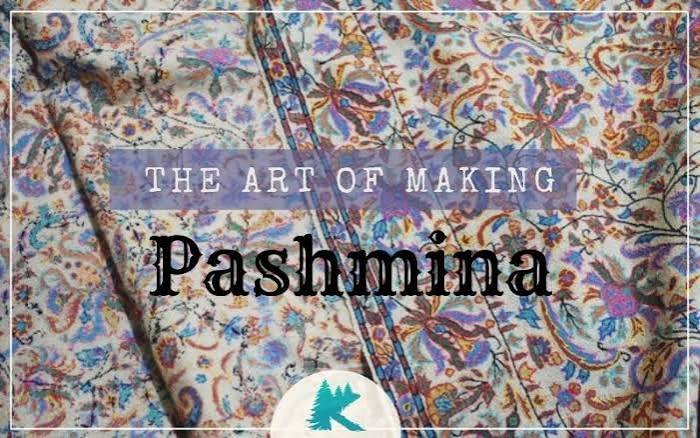
But behind every genuine Pashmina is a long Himalayan journey. It begins in the cold desert of Ladakh and travels to the looms of Srinagar. It passes through the hands of nomadic herders, women spinners, master weavers, washers and finishers.
So, how is Kashmiri Pashmina made step by step?
The simple answer is this: raw pashm is collected from the fine undercoat of Changthangi goats in Ladakh, cleaned and de-haired, hand-spun into yarn, handwoven on traditional looms in Kashmir, and finally washed, stretched and finished into a shawl.
But the real story is much deeper.
It is a story of geography, climate, skill and patience. It is also a story of people who are often invisible to the buyer: the Changpa herders of Ladakh and the Kashmiri women who spin delicate pashm into yarn.
Quick Answer: How Is Kashmiri Pashmina Made Step by Step?
If you want the full Pashmina making process in a quick flowchart, here it is:
- Harvesting in Ladakh: Changpa herders gently comb the fine undercoat, called pashm, from Changthangi goats.
- De-hairing and Cleaning: Coarse guard hair, dust and impurities are removed from the raw pashm.
- Hand-Spinning on Charkha: Clean pashm is hand-spun into fine yarn, traditionally by Kashmiri women.
- Hand-Weaving on Srinagar Looms: The yarn is woven into shawls, stoles or scarves on traditional handlooms.
- Washing and Finishing: The woven piece is washed, stretched, clipped, brushed and finished for softness and fall.
This is the heart of how Kashmiri Pashmina is made step by step.
Now let us understand each stage properly.
Stage 1: Raw Pashm Is Harvested in Ladakh
The journey begins in Ladakh’s Changthang region.
This is not an easy landscape. Changthang is a cold, dry, high-altitude plateau. The nomadic Changpa pastoralists live with their herds of goats, sheep and yaks at altitudes of over 4,000 metres, moving with the seasons and available pasture. (Sahapedia)
The famous Pashmina fibre comes from the Changthangi goat, also called the Pashmina goat. These goats grow a very fine undercoat during the harsh winter. This undercoat protects them from extreme cold. In spring and early summer, the goats naturally begin to shed this soft inner fleece.
This fine undercoat is called pashm.
A very important point: genuine pashm is not collected by roughly shaving the animal. It is usually collected by combing when the goat naturally sheds its winter underfleece. Government sources also describe the pashm as being combed out as the season ends, with the undercoat providing winter insulation before it is collected. (Handicrafts India)
This is why the first stage of the Pashmina process depends so much on nature.
No factory can rush this.
No machine can create the same mountain fibre overnight.
The goat grows the fibre because the climate demands it.
The Changpa Herders: The First Custodians of Pashmina
When people ask how is Kashmiri Pashmina made step by step, they often start from the loom.
But the story should start with the Changpa.
The Changpa are nomadic pastoralists of Ladakh. They rear the Changthangi goats in some of the toughest conditions in India. In winter, temperatures in these high-altitude regions can become extremely severe. A Ministry of Textiles blog notes that Changthangi goats develop thick, ultra-fine pashm in winter, and the Changpa collect the underfur in spring by combing rather than shearing. (Press Information Bureau)
Their work is not glamorous. It involves long days, animal care, migration, weather risk and fragile grazing landscapes.
For the buyer, this matters because ethical Pashmina begins here.
If herders do not receive fair value for raw pashm, the entire craft chain becomes weak. Modern buyers are now becoming more aware of traceability, animal welfare and fair returns to pastoral communities. Ladakh has also recently moved toward stronger institutional support for Pashmina, including efforts around local value addition and traceability. (The Economic Times)
So, when you buy authentic Pashmina, you are not just paying for a shawl. You are supporting a difficult mountain livelihood.
Stage 2: Cleaning and De-Hairing the Raw Pashm
Once the raw pashm is collected, it is not ready for weaving.
Fresh pashm contains fine fibre, but it may also have coarse outer hair, dust, vegetable matter and other impurities. The next important stage is cleaning and de-hairing.
De-hairing means removing the rougher guard hair from the soft underfleece. This is a very delicate job because the useful fibre is extremely fine. If handled carelessly, the fibre can break, weaken or lose quality.
This stage is important because softness depends on purity.
A shawl made from properly cleaned and de-haired pashm will feel softer and more refined. A poorly processed shawl may feel rough, uneven or heavy.
This is one reason why all products sold as “Pashmina” are not equal. Some may be mixed with wool, viscose, silk or machine-spun cashmere. Some may use lower-grade fibre. Some may not follow the traditional process at all.
For a serious buyer, this is where sourcing transparency becomes important.
You should always ask:
- Is the shawl made from pure pashm?
- Is the yarn hand-spun?
- Is the shawl handwoven?
- Is it GI-certified or traceable?
- Is the seller clearly explaining the source and process?
Stage 3: Hand-Spinning the Pashm on Charkha
After cleaning, the fibre reaches one of the most delicate stages: hand-spinning.
This is where loose pashm becomes yarn.
Traditionally, Kashmiri women have played a major role in spinning pashm into fine yarn. A Ministry of Textiles blog notes that Kashmiri weavers source raw pashm from the Changpa tribe, after which it is hand-spun into yarn and then handwoven into Pashmina shawls. (Press Information Bureau)
This stage requires patience and control. Pashm fibre is very fine, so it cannot be handled like ordinary wool. The spinner must understand tension, twist and consistency.
If the yarn is too loose, it can break.
If it is too tight, the final shawl may lose softness.
If it is uneven, the weave may not sit properly.
This is why hand-spinning is not just labour. It is skill.
Many people admire the weaver, but forget the spinner. That is unfair. Without the spinner, the loom has nothing to weave. The softness of Kashmiri Pashmina begins with the spinner’s hands.
Why Hand-Spun Pashmina Feels Different
Machine-spun yarn can look uniform. It can also be faster and cheaper.
But hand-spun Pashmina has a special character. It carries tiny natural variations. These variations are not defects. They are part of the handmade identity of the shawl.
A hand-spun Pashmina shawl may feel alive in a way machine-made fabric does not. It has softness, warmth and a natural drape that comes from slow processing.
This is also why genuine Pashmina is expensive.
The buyer is not only paying for fibre. The buyer is paying for time, skill and heritage.
Stage 4: Hand-Weaving on Srinagar Looms
Once the yarn is ready, it reaches the loom.
This is where Srinagar enters the story.
For centuries, Kashmir has been famous for shawl weaving. The raw fibre may come from Ladakh, but the world knows the finished Pashmina through Kashmiri craftsmanship.
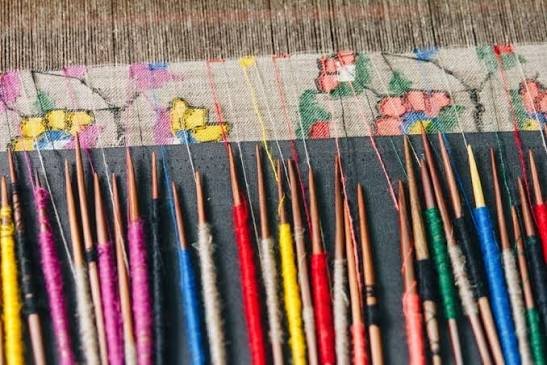
The yarn is mounted on a handloom and woven slowly into shawls, stoles or scarves. Traditional Pashmina weaving requires careful control because the yarn is fine and delicate. The weaver must maintain tension, alignment and evenness throughout the fabric.
This is a major part of how Kashmiri Pashmina is made step by step.
The process is not just technical. It is cultural. Many weaving families in Kashmir have inherited this skill across generations. The loom is not only a tool. It is part of the household economy, craft memory and regional identity.
Government sources also describe traditional Pashmina as hand-carded, spun into yarn and mounted on a loom for weaving. (Handicrafts India)
Plain Pashmina, Kani Pashmina and Embroidered Pashmina
After weaving, the shawl may remain plain or receive additional craft work.
A plain Pashmina shawl is valued for purity, softness and fall. It is elegant and timeless.
A Kani Pashmina shawl is woven with patterns using small wooden sticks called kanis. This is a highly skilled and time-consuming weaving tradition.
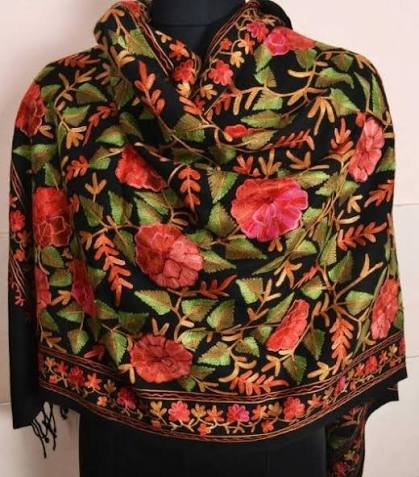
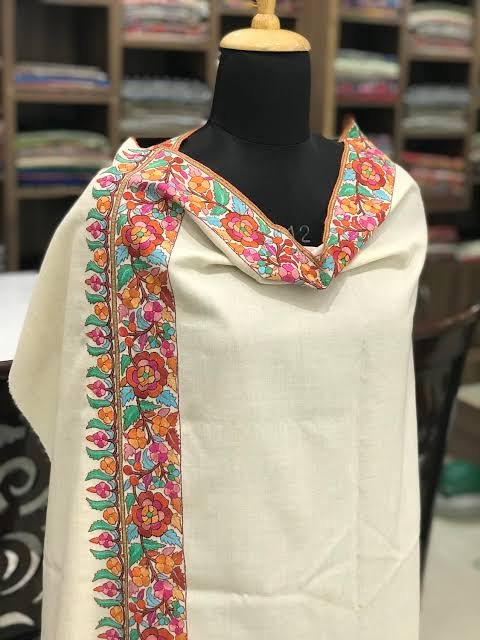
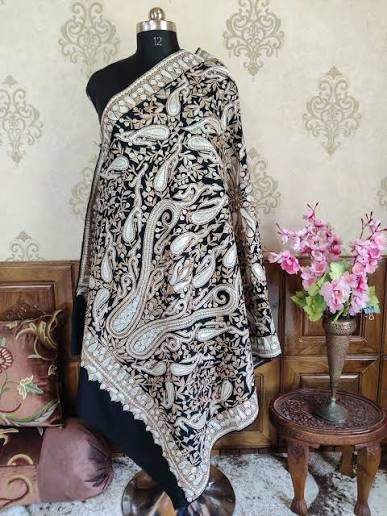
An embroidered Pashmina shawl may have Sozni, Papier Mache or other Kashmiri embroidery work. In such pieces, the shawl first becomes a woven base and then receives hand embroidery.
This is why the price of Pashmina can vary so much.
A simple plain shawl, a hand-embroidered shawl and a Kani shawl may all be called Pashmina, but the labour involved is very different.
Stage 5: Washing, Stretching and Finishing
After weaving, the shawl is still not ready for the customer.
The final stage is washing and finishing.
The woven shawl is washed carefully to remove dust, processing marks and stiffness. Then it may be stretched, dried, clipped, brushed and finished to improve softness, shape and fall.
This finishing stage makes the shawl look refined.
The goal is not to make it look artificial. The goal is to bring out the natural beauty of the fibre. A good Pashmina should feel soft, warm and graceful without looking overly shiny or synthetic.
For buyers, this is where touch becomes important.
A real Pashmina should feel gentle and warm. It should not feel harsh, plasticky or unusually slippery. It should have a natural softness, not a fake surface polish.
Why the Ladakh-to-Srinagar Journey Matters
The journey of raw pashm is geographically incredible.
It begins in Ladakh’s high-altitude Changthang region, where the Changthangi goat grows the fine undercoat. It then moves through traders, cooperatives or supply networks toward Kashmir. In Kashmir, the fibre enters the world of hand-spinning, hand-weaving and finishing.
This means authentic Kashmiri Pashmina is not the product of one place alone.
It is a Himalayan partnership.
Ladakh gives the fibre.
Kashmir gives the craft.
The Changpa protect the herds.
Women spinners prepare the yarn.
Weavers bring the shawl to life.
Finishers prepare it for the buyer.
When you understand this chain, you also understand why a genuine shawl cannot be extremely cheap.
Why Ethical Sourcing Matters to Modern Buyers
Today’s Indian buyer is changing.
Earlier, many people only asked: “Is this pure Pashmina?”
Now, better-informed buyers ask: “Where did the fibre come from? Who made it? Was it hand-spun? Was it handwoven? Is it fairly sourced?”
That is a good change.
Ethical sourcing matters because Pashmina is not just a luxury product. It is connected to fragile Himalayan livelihoods. The Changpa herders face climate challenges, changing grazing patterns and economic pressures. Kashmiri artisans also face competition from machine-made products sold under confusing labels.
The Ministry of Textiles has noted that genuine handwoven Kashmiri Pashmina competes with machine-woven cashmere shawls and cheaper blends that are often sold under the broader name of Kashmir Pashmina. (Press Information Bureau)
This is why transparency protects everyone.
It protects buyers from fake products.
It protects artisans from unfair competition.
It protects herders by giving value to authentic raw pashm.
It protects the cultural identity of the craft.
How to Identify a Better Pashmina Seller
If you are buying Pashmina online or from a showroom, do not only look at the photograph.
Ask practical questions.
A genuine seller should be comfortable explaining the making process. They should know the difference between raw pashm, cashmere, machine-made shawls and handwoven Pashmina.
Here are a few signs of a better seller:
- They mention Changthangi goat or Ladakh pashm clearly.
- They explain whether the shawl is hand-spun and handwoven.
- They are transparent about embroidery, weave and fibre composition.
- They do not sell every shawl as “pure Pashmina” at suspiciously low prices.
- They offer GI-certified or authenticity-backed pieces where possible.
- They educate the buyer instead of only pushing discounts.
In short, a good Pashmina seller should help you understand how is Kashmiri Pashmina made step by step, not hide the process.
Why Genuine Pashmina Takes Time
In today’s world, we are used to fast fashion.
Order today. Deliver tomorrow. Wear once. Forget later.
Pashmina is the opposite.
The fibre takes a season to grow.
The herder waits for the right time to comb.
The cleaner removes impurities.
The spinner slowly creates yarn.
The weaver works carefully on the loom.
The finisher prepares the final piece.
This slow process is what gives Pashmina its value.
A genuine shawl is not just a winter accessory. It is a piece of Himalayan time.
Final Thoughts: A Shawl With a Long Memory
So, how is Kashmiri Pashmina made step by step?
It is harvested from Changthangi goats in Ladakh, cleaned and de-haired, hand-spun into fine yarn, handwoven on Srinagar looms, and finished carefully into a shawl.
But this is only the technical answer.
The real answer is more beautiful.
Kashmiri Pashmina is made through the combined effort of mountain animals, nomadic herders, women spinners, skilled weavers and finishing artisans. It travels from Ladakh’s harsh plateau to Kashmir’s craft homes. It carries warmth from one Himalayan region and artistry from another.
That is why genuine Pashmina is special.
When you buy an authentic piece, you are not just buying softness. You are buying a story of patience, geography, skill and dignity.
FAQs: How Is Kashmiri Pashmina Made Step by Step?
1. How is Kashmiri Pashmina made step by step?
Kashmiri Pashmina is made in five main steps: raw pashm is collected from Changthangi goats in Ladakh, cleaned and de-haired, hand-spun into yarn, handwoven on traditional Srinagar looms, and finally washed and finished.
2. Where does raw Pashmina come from?
Raw Pashmina, also called pashm, comes from the fine undercoat of Changthangi goats found in Ladakh’s high-altitude Changthang region.
3. Is Pashmina taken by killing goats?
No. Genuine pashm is collected by combing the goat’s naturally shedding undercoat. The goat is not killed for Pashmina.
4. Who are the Changpa herders?
The Changpa are nomadic pastoralists of Ladakh who rear Changthangi goats. They are the first custodians of the Pashmina supply chain.
5. Why is hand-spinning important in Kashmiri Pashmina?
Hand-spinning turns delicate pashm fibre into fine yarn. It gives authentic Pashmina its soft, natural and handmade character.
6. Is every Pashmina shawl handwoven?
No. Many products sold as Pashmina today may be machine-made or blended. Traditional Kashmiri Pashmina is hand-spun and handwoven.
7. Why is real Pashmina expensive?
Real Pashmina is expensive because the fibre is rare, the process is slow, and many skilled people are involved from harvesting to hand-spinning, weaving and finishing.
8. What is the difference between cashmere and Pashmina?
Cashmere is a broad term for fine goat fibre from different regions. Kashmiri Pashmina usually refers to the fine pashm fibre associated with Changthangi goats and the traditional hand-spun, handwoven craft of Kashmir.
9. How can I check if a Pashmina is authentic?
Look for seller transparency, GI certification where available, hand-spun and handwoven details, natural softness, proper labelling and realistic pricing.
10. Why does ethical sourcing matter in Pashmina?
Ethical sourcing helps protect Changpa herders, Kashmiri spinners and weavers, while also protecting buyers from fake or machine-made products sold as genuine Pashmina.
See Also
How Pashmina/Cashmere Wool is Produced | A Himalayan Herder Explains
How Pashmina is Made
What Does Real Kashmiri Pashmina Feel Like? Tactile Identity Guide
How Much Does a Real Kani Shawl Cost? 2026 Price & Buying Guide